How Does Screen Time, Social Media, and Sleep Influence My Mood

Let Me Be Clear About Something First
I spend a lot of time on screens.
A significant portion of my workday involves screens: telehealth sessions, documentation, emails, and administrative tasks. After work, I watch TV to wind down. I check the news in the morning. I text my friends. I use my phone for navigation, podcasts, and looking up that actor’s name I can’t quite remember.

This is not a post about how screens are evil or how we should all go live in the woods.
I’m not anti-technology. I’m not going to tell you to delete all your apps or throw your phone in a drawer.
But I am going to tell you something important: the way most apps and platforms are designed—especially free ones—is intentionally built to capture and hold your attention. And understanding that context changes everything.
It’s Not About Willpower
Here’s what I see in my therapy practice all the time:
People who feel terrible about how much time they spend on their phones. People who set intentions to “be more present” or “stop scrolling so much,” and then find themselves three hours deep into social media at midnight, wondering how it happened again.
They blame themselves. They assume it’s a lack of discipline or self-control.
But here’s the reality: you’re not weak. You’re human.
And you’re interacting with systems designed to take advantage of very normal brain and nervous system responses.
Most social media platforms make money by selling user attention to advertisers. The longer someone stays on a platform, the more opportunities there are to show ads and promoted content. As a result, these platforms are optimized for engagement.
Common design features include:
Infinite scroll, which removes natural stopping points
Variable rewards, where you don’t know whether the next post will be boring or compelling
Notifications, designed to pull you back in
Emotionally activating content, which tends to keep people engaged longer
This isn’t a conspiracy theory. It’s the business model.
When you understand this, it becomes easier to stop framing screen use as a personal failure and start approaching it with more clarity and agency.
The Pattern I See Most Often
This cycle shows up again and again in my work with clients:
During the day, people are busy and overwhelmed. Work demands, family responsibilities, and constant pressure leave very little room for rest or self-care.
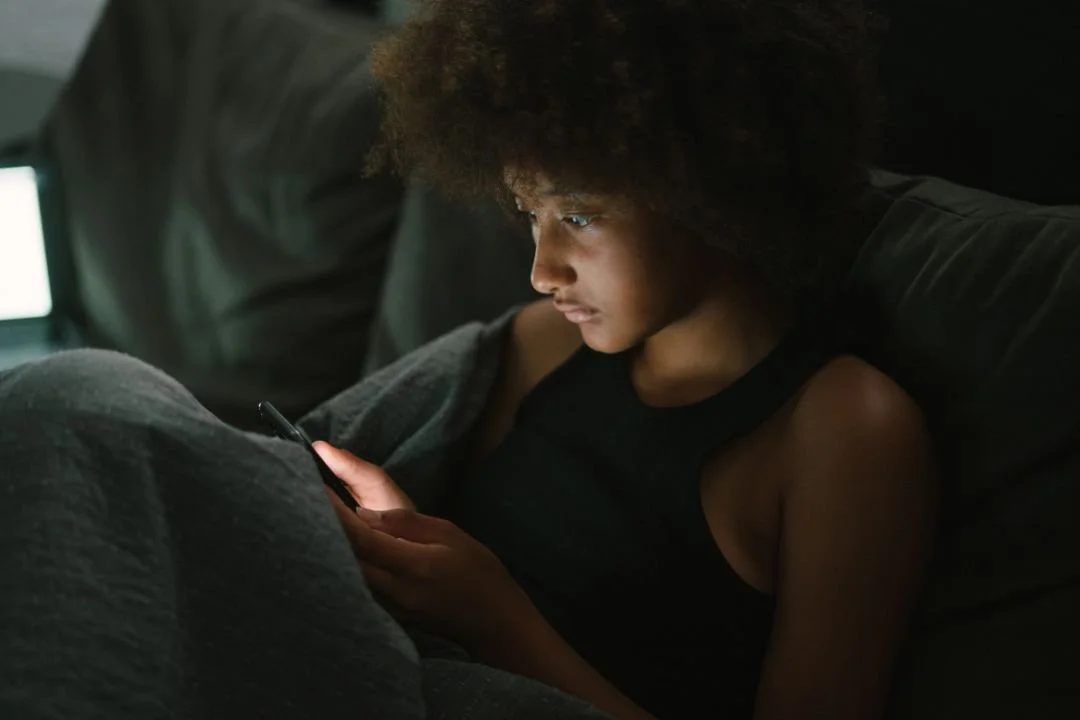
At night, when the day finally ends, exhaustion sets in. People get into bed and instead of sleeping, they scroll.
This isn’t laziness or self-sabotage. It’s often the only time that feels like it belongs to them.
This pattern is sometimes called revenge bedtime procrastination…staying up late to reclaim personal time that didn’t exist during the day.

The problem is that scrolling often doesn’t restore the nervous system the way sleep does.
People lose track of time, miss the period when their body is most ready to fall asleep, and end up going to bed later than intended. Sleep quality suffers. The next day, they wake up with fewer internal resources. Less patience, less emotional regulation, less resilience to stress.
To compensate, they rely on quick fixes: caffeine, more scrolling, irritability, emotional reactivity.
By nighttime, they’re even more depleted and the cycle repeats.
Exhaustion → scrolling → delayed sleep → poorer regulation → more exhaustion.
Screens Don’t Create Problems. They Amplify Them
Late-night scrolling is often the most noticeable issue, but screen time affects mood in other ways as well.
Screens tend to amplify whatever is already dysregulated.
If you’re anxious, constant exposure to alarming news or social media content can heighten that anxiety. If you’re depressed, passive scrolling can increase numbness and disconnection. If you’re lonely, exposure to curated online lives can intensify that feeling.
Screens don’t cause these emotional states on their own, but they can make them harder to regulate.
Over time, excessive or unintentional screen use can also pull people away from:
Being present in their physical environment
Spending time in nature
Fully engaging in real-life relationships
Activities that genuinely restore them
Why Notifications Are Especially Disruptive
Notifications are one of the most underestimated contributors to chronic stress.
There was a period in my own life when I treated every notification as urgent. Every text, email, or call demanded immediate attention. My nervous system stayed on high alert, and true rest only came in brief, fragile windows.
Eventually, I took a break from my phone and discovered something important: nothing catastrophic happened. The world kept functioning.
That experience helped my nervous system learn that it was safe to be unavailable at times.
Now, I keep most notifications turned off. Calls and texts can get through. Everything else waits until I choose to engage.
This wasn’t comfortable at first. My body had to learn through experience that constant availability wasn’t required for safety or competence.
Devices don’t get to control me. I choose when and how to engage.
“But What If There’s an Emergency?”
This is a common concern.
The reality is that most notifications are not emergencies. Most emails can wait. Most texts do not require immediate responses.
And true emergencies are better handled by emergency services, not instant access to another person who happens to have a phone.
We’ve been trained to treat every notification as a demand rather than a request, and that keeps nervous systems in a constant state of low-grade urgency.
What I’m Not Saying
To be clear, this is not an argument for:
Eliminating screens
Quitting social media
Living a phone-free life
Shaming yourself for how much time you spend online
What Might Actually Help
If you want to change your relationship with screens, start small.
Consider experimenting with one change at a time:
Turning off nonessential notifications
Keeping your phone out of the bedroom
Setting a consistent time to stop scrolling at night
Charging your phone outside your bedroom
When you reach for your phone late at night, ask yourself what you’re actually needing. Rest? Relief? Connection?
Scrolling often fills time, but it doesn’t always meet those needs.
Pay attention to sleep. If falling asleep is difficult, it may not be insomnia, it may be that screen use is delaying your body’s readiness for rest.

The Shift I’m Inviting You to Make
This isn’t about perfection or abstinence.
It’s about moving from reactive screen use to intentional screen use.
That shift takes time. It can feel uncomfortable. Your nervous system has to relearn that it’s safe to not be constantly on alert.
But it’s possible.
And when people make that shift, they often report feeling more present, more rested, and more like themselves.
They don’t stop using screens.
They just stop letting screens run the show.