


Why Fall Feels Like the Start of Everything (Even When Nothing's Actually Starting)
A few weeks ago, a client sat down and said, "I don't know what's wrong with me. It's August and I suddenly feel like I need to overhaul my whole life."
She doesn't have kids. Nothing on her calendar was actually changing. But there she was, making lists, signing up for things, feeling like she was behind on something she couldn't quite name.
I hear a version of this almost every year, right around this time. And if you're feeling it too, I want you to know there's a real explanation for it. Actually, there are a few.
You don't need school-age kids for fall to hit your nervous system.

Is It Anxiety or Intuition? How to Tell the Difference
Anxiety and intuition can live in the same place in your body. That's exactly why they're so easy to confuse.

Are Intrusive Thoughts Normal? What They Mean (And What They Don't)
The thought you're scared to say out loud usually doesn’t mean what you think it means.
There's a moment I see all the time in my office. A client finally works up the courage to share a thought that's been eating at them, and before they even get it out, they're apologizing for it.
"I know it's silly." "I know this sounds stupid." "I know it's dumb, but..."
Why Small Acts of Kindness Are Good for Your Mental Health (and a Gentle 31-Day Challenge to Try)
The most powerful thing you do for your mental health this month might also be the softest.

Why Am I So Anxious About AI Taking My Job? A Psychologist Explains
AI job loss anxiety is the persistent, often background fear that artificial intelligence will make your work, or your whole profession, obsolete. It shows up as trouble sleeping, irritability, and a creeping sense that the ground is shifting under a career you spent years building. It's increasingly common, it's a reasonable response to genuine uncertainty, and it responds to support.

Burnout Isn’t a You Problem
Burnout is not produced inside of you. It’s produced between you and the system you’re working inside of.
“What’s wrong with me?” That’s the question I hear most. Not “I think I’m burned out.” It’s: Why have I lost my spark? Why don’t I care anymore? Why am I not the person I used to be?

Is It Burnout or Depression? A Psychologist Explains the Difference
Workplace burnout is a legitimate phenomenon recognized by the World Health Organization, and a 2025 Forbes study found that 66% of U.S. employees have experienced it. But it's still one of the most misidentified experiences people bring into my office.
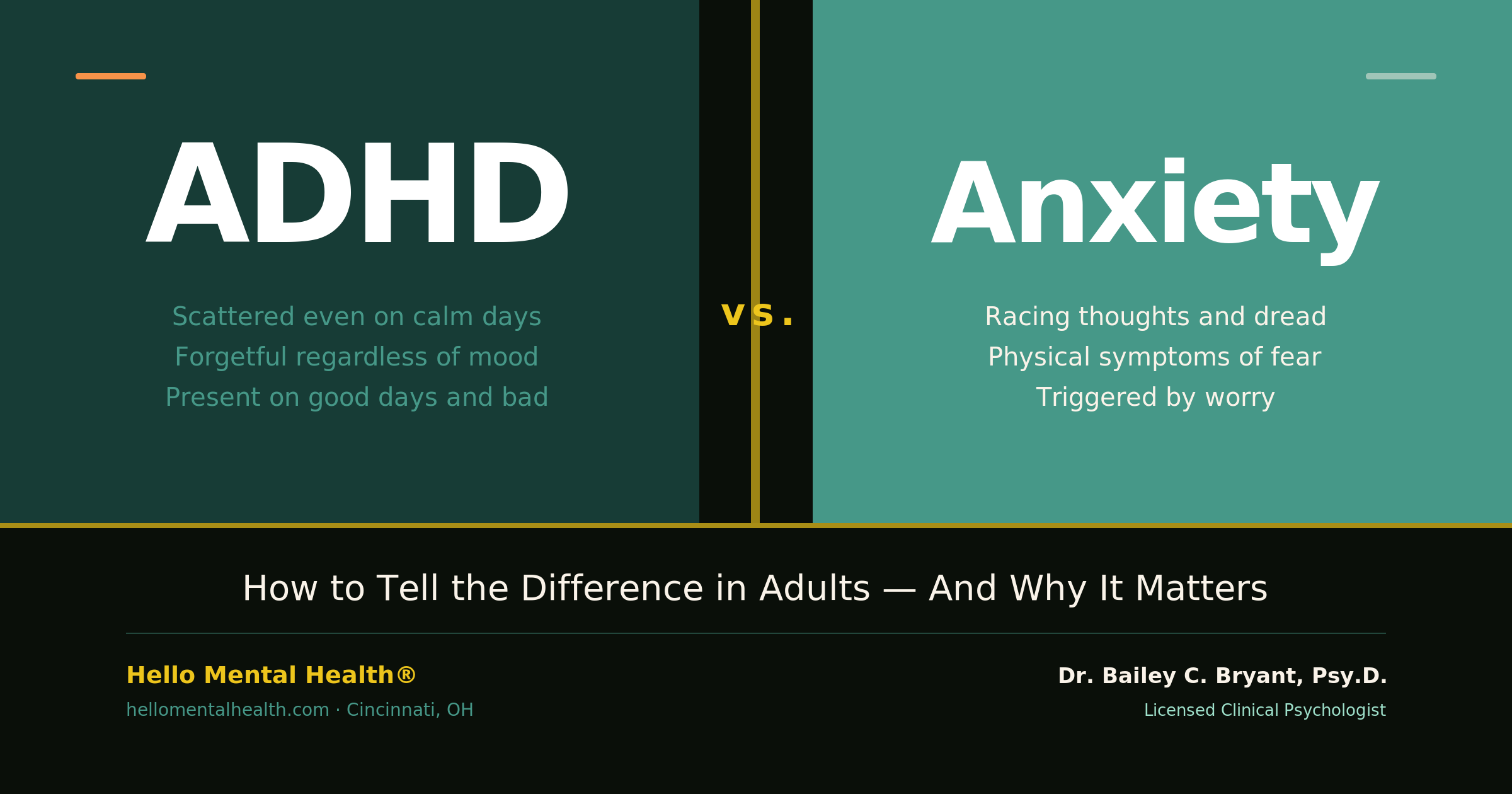
ADHD vs. Anxiety: How to Tell the Difference in Adults (And Why It Matters)
If you've been managing anxiety for years and still feel like something isn't adding up — this might be worth reading.
A client comes in describing symptoms of anxiety. They've had that label for years — from a doctor, a therapist, or their own Google spiral. They've done the work, and some things have gotten better… but something still feels off.
They're scattered. Forgetful. Struggling to follow through on things that should be simple. Exhausted by how much harder daily life seems to be for them than for everyone else.
What I often find is that anxiety wasn't the whole story. ADHD was there the whole time — and in adults, it often gets missed.
If I Stopped Going to Therapy, Did I lose My Progress?
If you’re hovering over the "Book Now" button after a long break, the biggest question on your mind is likely: "Did I lose everything I worked for?"

How to Take Control of Panic Attacks (And Get Your Life Back)
Effective treatment for panic disorder doesn't just teach you coping skills. It helps you fundamentally change your relationship with the physical sensations that trigger panic.
When You Feel Depression Coming: What to Do Before It Gets Worse
Early intervention won't always prevent a depressive episode. But it can make the difference between weathering it and drowning in it.

Why Are High-Functioning People Falling Apart Right Now?
And why that doesn't mean something is wrong with you.
You go to therapy. You know your coping skills. You exercise, or at least you try to. You're self-aware enough to know when you're struggling and resourceful enough to do something about it. And yet….

Why You Feel Guilty When You Rest (And What to Do About It)
Spoiler: It's not a personal failing. It's an alliance of forces working against you.
The Pattern I see everyday: A client sits across from me and describes their week. They're exhausted. Burnt out. Running on fumes.
I ask, "When did you last rest?"

What Questions Should I Ask Before Scheduling a Mental Health Therapy Appointment?
As the Practice Coordinator, I frequently talk to people who are interested in starting therapy, but still have questions. That’s normal and ok!

How Does Screen Time, Social Media, and Sleep Influence My Mood
A significant portion of my workday involves screens: telehealth sessions, documentation, emails, and administrative tasks. After work, I watch TV to wind down. I check the news in the morning. I text my friends. I use my phone for navigation, podcasts, and looking up that actor’s name I can’t quite remember.
This is not a post about how screens are evil or how we should all go live in the woods.

What Is Your Therapist Actually Thinking During Your Session
Spoiler: It's not what you think.
Most people come into therapy worried that I'm sitting here judging them, or passively listening and waiting for them to figure out the "right" answer that I already know, or just... waiting for the session to be over.

Can I Start Therapy If I’m Not Sure What I Need Yet?
A lot of people assume they need a clear problem, a specific goal, or the “right words” before starting therapy. From where I sit — answering calls, reading intake forms, and helping people get scheduled — I can tell you that uncertainty is actually one of the most normal starting points.
You don’t have to have it all figured out before you begin.

Can AI Replace Your Therapist? A Psychologist’s Take on AI and Mental Health
Short answer: it depends on what you’re looking for—and what kind of mental health support you need.
There tends to be two different types of mental health needs that people seek support for…
Late Diagnosed ADHD in Adults: Why It’s Missed (And Why It Matters Now)
You’ve spent years wondering what’s wrong with you.
Why does staying organized feel so hard? Why do basic tasks drain you? Why does it seem like everyone else is managing life with less effort?

Behind the Scenes: How We Match Clients with the Right Therapist
Finding the right therapist can feel overwhelming — especially if you’re reaching out for support for the first time. One of the most common questions we hear is:
“How do you decide which therapist is right for me?”
Here’s a look at how we do it at Hello Mental Health — from an administrative perspective.