Why Fall Feels Like the Start of Everything (Even When Nothing's Actually Starting)
A few weeks ago, a client sat down and said, "I don't know what's wrong with me. It's August and I suddenly feel like I need to overhaul my whole life."
She doesn't have kids. Nothing on her calendar was actually changing. But there she was, making lists, signing up for things, feeling like she was behind on something she couldn't quite name.
I hear a version of this almost every year, right around this time. And if you're feeling it too, I want you to know there's a real explanation for it. Actually, there are a few.
You don't need school-age kids for fall to hit your nervous system.

The Misunderstanding
Here's what I correct most often this time of year. People assume fall anxiety is really just back-to-school stress bleeding onto adults who happen to live near a school calendar. And if you're a parent, that stress is real. Schedules get packed fast, routines get upended overnight, and your nervous system feels that shift whether you're ready for it or not.
But here's what surprises people: this doesn't only show up for parents. I see it just as often in adults who haven't touched a school calendar in decades. Partly because fall really does bring real change for a lot of us, kids or no kids. Colleagues come back from summer slowdown. Projects that stalled in July suddenly need attention again. Social calendars fill back up. So some of what you're feeling isn't manufactured at all. It's your system picking up on something real shifting around you.
Why This Actually Happens
But underneath that real load, there's also a layer of old programming.
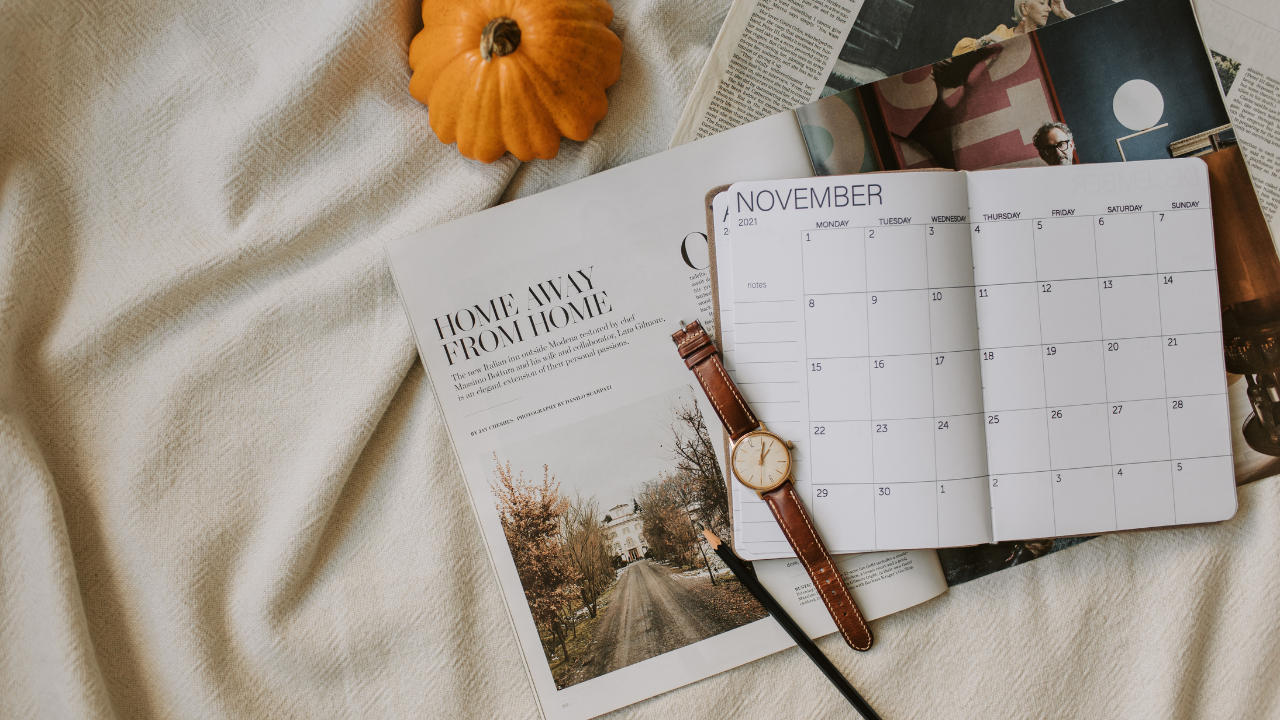
We were trained, in our most formative years, that fall is when things "start." Summer was the slow season, the one we were told to treasure, the one we were supposed to fill with rest and vacations. Fall was the reset button. New backpack. New schedule. And an unspoken expectation to walk in on day one as some better version of yourself than the one who left in June.
That rhythm got wired into us before we had any say in it. It doesn't just switch off because we grew up and our calendars stopped following a school year.
So even now, August rolls around and something in us says: it's time. Time to start the new habit. Launch the project. Get serious. Fix whatever slipped over the summer. Social media doesn't help. It's full of "fall reset" content that reinforces the idea that summer was supposed to be some magical transformative window, and now it's time to hustle.
The Quieter Piece Underneath
There's something else going on that doesn't get named enough, and it's not conditioning and it's not stress. It's closer to grief.
Summer ending is its own small loss. Even if you had a genuinely good one, there's a part of you that hoped for a little more time, a little more ease, a little more of that spacious feeling before it slips away. And if summer didn't go the way you'd hoped, that adds another layer. Fall anxiety gets treated like pure stress, but a piece of it is often quieter than that. It's mourning a season.

I'll Be Honest With You
I feel this myself every year. In August I notice a burst of energy, a pull to take on new things and tighten up everything that felt loose over the summer. And by mid-September, more often than not, my plate is too full. None of it was forced on me – I just followed an old script I never stopped to question.
There's a third layer too, one that has nothing to do with programming or grief. As daylight starts shortening, your body genuinely registers the change. It's subtle at first, easy to miss. But that shift can quietly stir up some anxiety about the season ahead. And once that starts, it's an easy slide into thinking about the holidays, and before you know it you're stuck in a low-grade loop of anticipatory stress without knowing exactly when it started.
Why It Matters
If you don't untangle what's actually driving that fall urgency, you'll misread it as motivation. The risk is that you'll follow it blindly without questioning it. And it'll land you right back in an overloaded plate, and right back in that same overwhelmed, overstressed mid-September crash, year after year.
Here's the part I'm starting to find hopeful: a piece of this is self-generated, which means you get to opt out of it. Not all of it. Some of what you're feeling is real, and some of it deserves to be grieved rather than fixed. But the piece that's old programming? That one's yours to put down. Fingers crossed we all consider opting out to some degree this go-round.
So What Do You Do?
You don't have to sort out exactly which layer is which to give yourself permission to slow down. You don't have to do the same things you've always done. Summer wasn't a countdown to a transformation deadline. Fall doesn't require you to prove that you've "upgraded." If you notice that familiar urgency to suddenly overhaul everything, it's worth pausing and asking yourself: is this actually mine? Or is this the old programming talking?
If this is a pattern you keep hitting, the August surge and then the September crash, that's worth exploring with someone. Therapy can help you tell the difference between genuine motivation and old conditioning, so your fall actually feels like yours.
Reach out to Hello Mental Health to talk with one of our Cincinnati-based psychologists about anxiety, seasonal stress, or anything else that's been sitting heavier than usual lately.
Bailey C. Bryant, Psy.D. is the founder and steward of Hello Mental Health, a group therapy practice in Cincinnati, Ohio.
This post is for educational purposes only and does not constitute a clinical diagnosis or replace individualized care from a licensed provider.