ADHD vs. Anxiety: How to Tell the Difference in Adults (And Why It Matters)
If you've been managing anxiety for years and still feel like something isn't adding up, this might be worth reading.
The Most Common Misdiagnosis I See
A client comes in describing symptoms of anxiety. They've had that label for years… from a doctor, a therapist, or their own Google spiral. They've done the work, and some things have gotten better… but something still feels off.
They're scattered. Forgetful. Struggling to follow through on things that should be simple. Exhausted by how much harder daily life seems to be for them than for everyone else.
What I often find is that anxiety wasn't the whole story. ADHD was there the whole time and in adults, it often gets missed.
ADHD Symptoms vs. Anxiety Symptoms: The Key Difference
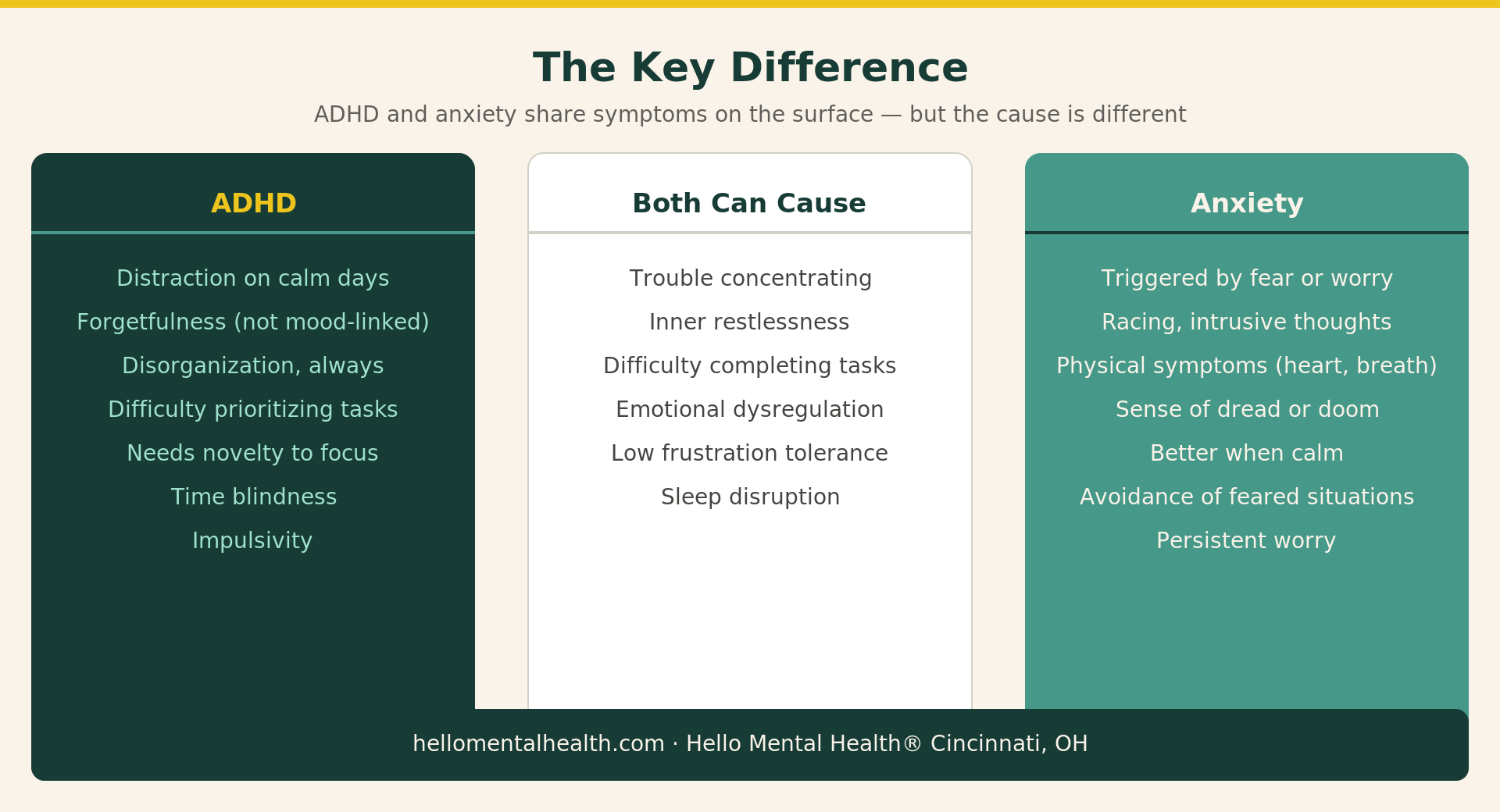
ADHD and anxiety share a lot of surface-level symptoms: trouble focusing, inner restlessness, difficulty completing tasks. That overlap is exactly why they're so often confused.
But the underlying mechanism is different and that difference matters clinically.
Anxiety disrupts focus when worry and fear are present. ADHD disrupts focus regardless of mood.
With anxiety, distraction and forgetfulness tend to show up when anxiety is activated. When you're calm, your brain functions more “normally.” The anxiety is what's driving the dysfunction.
With ADHD, there is no "when you're calm" exception. Inattention, forgetfulness, disorganization, and difficulty prioritizing are not mood-dependent. They show up on good days and bad days, in quiet moments and chaotic ones.
Anxiety also has its own distinct calling card: a sense of dread or impending doom, racing heart, rapid breathing, sweating, and persistent worry that's hard to switch off. Those aren't ADHD symptoms. They're anxiety's signature.
When You Have Both ADHD and Anxiety
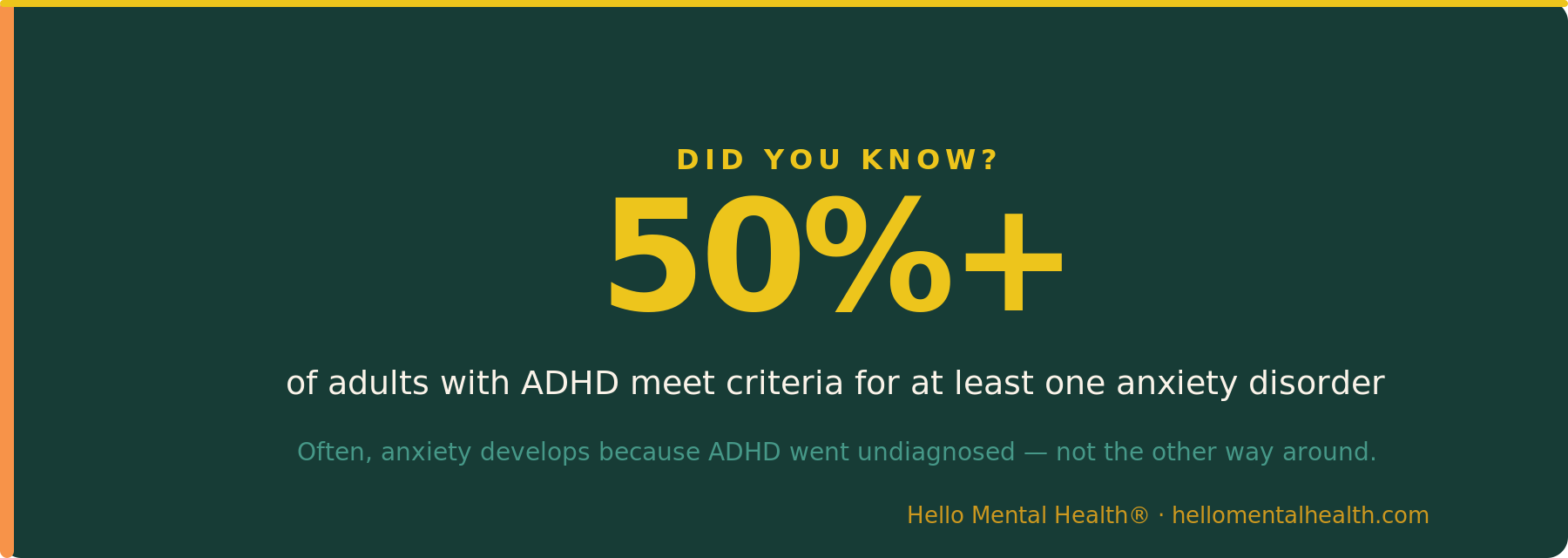
Research consistently shows that anxiety disorders are among the most common comorbidities in adults with ADHD with more than half of adults with ADHD meeting criteria for at least one anxiety disorder.
Often, the anxiety develops because of unmanaged ADHD. Years of struggling, falling behind, and not knowing why tends to produce a chronic low hum of fear and self-doubt. The anxiety is real and worth treating, but it's not the root.
Knowing which is driving the bus changes everything about how you treat it.
What Happens When ADHD Goes Undiagnosed
When anxiety is treated but ADHD is missed, you can do all the right things and still feel like you're failing. You get better at managing worry and you're still disorganized, still losing things, still behind, still confused about why everything feels harder for you than for everyone else.
Without an accurate diagnosis, most people fill in that gap the only way that makes sense: something must be wrong with me.
Missing an ADHD diagnosis in adulthood doesn't just mean missing a treatment option. It means years (sometimes decades) of blaming yourself for a neurodevelopmental difference you didn't know you had.
A Note From Personal Experience
I spent years assuming anxiety explained everything. When I struggled in moments that didn't feel particularly anxious, I assumed the anxiety must be lurking beneath the surface even when I couldn't locate it.
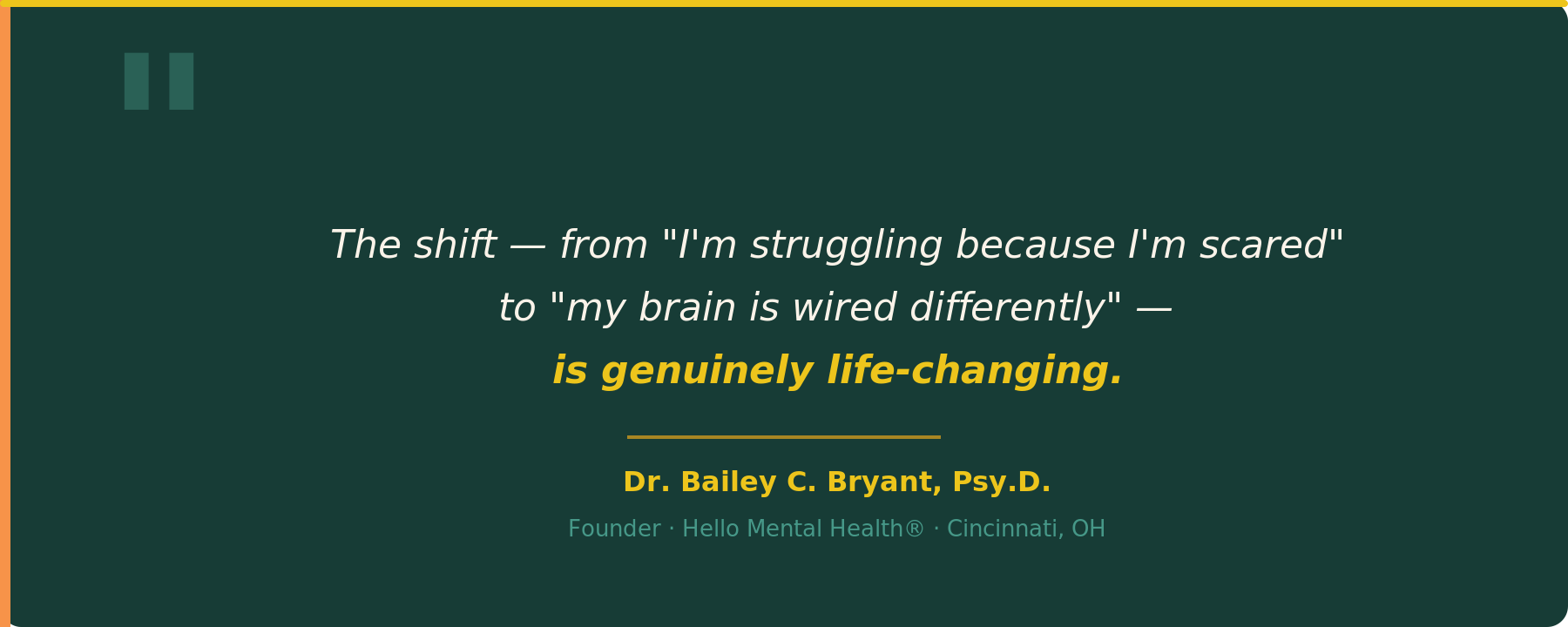
Getting my own ADHD diagnosis changed that. It let me finally separate what was actually happening: what was anxiety telling me I wasn't safe, and what was ADHD, a brain with differences in how it uses dopamine, that needed structure and novelty rather than more reassurance?
When I stopped collapsing those two things together, I could meet my actual needs. I gave myself grace I'd been withholding for years.
Think It Might Be More Than Anxiety? Start Here.
If any of this resonated, I'm not asking you to self-diagnose. I'm asking you to get curious.
Talk to your provider. Ask about a comprehensive evaluation. At Hello Mental Health, our adult ADHD assessments in Cincinnati are designed to look at the full picture (including anxiety, history, and how these patterns actually show up in your daily life) so you finally get an answer that fits.
You deserve to understand what you're working with. That starts with asking the question.
Bailey C. Bryant, Psy.D. is the founder and clinical director of Hello Mental Health, a group therapy practice in Cincinnati, Ohio, specializing in anxiety, ADHD, OCD, and complex presentations.
This post is for educational purposes only and does not constitute a clinical diagnosis or replace individualized care from a licensed provider.